Don’t give them a reason
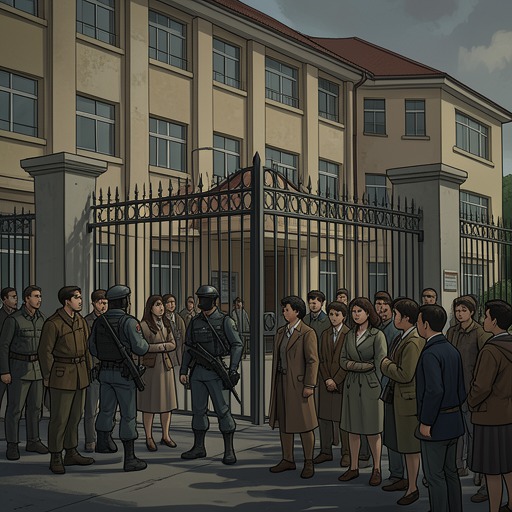
On the Come Up“Don’t give them a reason” is both a practical code for navigating Midtown and a bitter measure of its limits. For Brianna, the phrase names the disciplined behavior expected of Black students under suspicion: keep hands visible, buy something if entering a shop, use respectful forms of address, and remain calm. Yet the rules cannot guarantee fair treatment. Their repetition makes the burden plain: the people being watched must manage not only their actions but also the assumptions others may attach to them.
The Rules in Midtown
As Brianna walks with Malik and Shana toward Sal’s, she reflects on the unspoken rules that govern visits to shops and cafés in Midtown. Hands must stay out of pockets and backpacks, lest anyone suspect shoplifting. Students must say “ma’am” and “sir” and keep their cool, lest anyone read them as aggressive. They should enter a business only when they intend to buy something, lest they be mistaken for would-be robbers. If followed through a store, they must remain composed and give no sign that they are up to something.
The list culminates in the blunt refrain: “Basically, don’t give them a reason. Period.” Its absolute ending sounds less like a promise of safety than a demand for constant vigilance. Each instruction anticipates a suspicion the students have not earned; together, they make ordinary errands feel like situations that require careful self-monitoring. Brianna is not describing a formal policy, but a shared code learned from experience.
Compliance Does Not Ensure Safety
Brianna immediately qualifies the rules’ apparent logic: she sometimes follows them and still encounters trouble. A few months earlier, she, Sonny, and Malik entered a comic shop, where the clerk followed them around until they left. Malik recorded the incident on his camera. The recording gives the episode a concrete trace, but it does not change the outcome: the three young people leave, and their careful behavior has not prevented them from being treated as suspicious.
Sal’s is one of the few Midtown places where, in Brianna’s account, these rules do not apply. Its dingy tan walls, torn booth leather, and limited healthy menu stand in contrast to the scrutiny associated with other businesses. The qualification matters: the code is not simply a set of precautions that Brianna chooses to observe everywhere. It marks where she expects suspicion and where she can relax the performance demanded by it.
The Refrain Beyond the Store
The phrase resonates beyond these instructions because the same pressure appears in Brianna’s pursuit of rap. When a man at the Ring asks whether she will perform nursery rhymes, the smirks and snickers recall what Aunt Pooh warned her about: as a girl entering a male-dominated scene, Brianna will have to do twice the work for half the respect, be cutthroat, and show no weakness. She answers the insult with a joke that wins laughter and dap from some of the men; in that moment, she is accepted, but acceptance comes through meeting a standard imposed on her.
That encounter parallels the Midtown code without making the two situations identical. In each, Brianna is expected to anticipate how others may judge her and shape her conduct accordingly. In the store, restraint is meant to head off the assumption that she is stealing or threatening. At the Ring, verbal sharpness helps her resist being dismissed as a girl who cannot rap. Her response there gains recognition, while the store rules offer no such assurance.
Judgment, Reputation, and Contradiction
The refrain also echoes through a different argument at home. When Brianna tells Jay that people “only jump on what you give them,” Jay initially cannot answer. She then grants that people will make assumptions about both of them regardless of what they say or do, but draws a distinction: she tries not to give people additional reasons to assume things about her and asks whether Brianna sees her walking around talking about drugs. Their exchange exposes a tension within the refrain. Managing appearances may matter, but it cannot erase other people’s assumptions—and the demand to manage them can itself become another burden.
Brianna’s own experience sharpens that contradiction. She knows that following the rules does not prevent a shopkeeper from shadowing her and her friends; she also knows that others’ interpretations can gather force regardless of what she intends. “Don’t give them a reason” therefore works as a survival instruction, not as a guarantee or an admission that suspicion is justified. Its force lies in the gap between the control it demands of those being watched and the freedom from judgment it cannot deliver.